What Happened in African Fashion This Week.
This week’s developments extend the trajectory seen across South African Fashion Week, pointing to a fashion industry increasingly engaging with its structural foundations where legal systems, policy frameworks, and institutional alignment are becoming as critical as creative output.
From cross-continental summits and platform expansions to community-driven initiatives and retail activations, activity across the sector reflects a growing emphasis on governance, access, and long-term ecosystem development.
At the same time, brands and cultural platforms continue to shape the industry’s visual and narrative direction, ensuring that creativity remains central even as these systems evolve.
Together, these developments signal a shift from visibility to consolidation—where frameworks, infrastructure, and cross-sector coordination are positioning African fashion as an industry not only producing culture, but actively building the mechanisms required to sustain, protect, and scale it across local and global contexts
Clearly Invincible brings you the latest weekly African fashion recap.
Organisation
Pan-African Fashion Law Summit Establishes Policy Platform and Releases Landmark Report

The inaugural Pan-African Fashion Law and Policy Summit (PAFALAPS 2026), convened by the Fashion Law Institute Africa, has marked a significant development in aligning legal frameworks across the continent’s fashion ecosystem.
Held as a virtual gathering, the summit brought together legal experts, policymakers, and industry stakeholders from five African regions, establishing a dedicated platform for fashion law dialogue while launching the first State of Fashion Law and Policy in Africa 2026 Report.
Discussions highlighted a consistent continental challenge: while legal frameworks exist, they remain fragmented and misaligned with the realities of informal and community-based fashion economies. Key issues identified include high intellectual property registration costs, limited enforcement capacity, and structural supply chain inefficiencies.
A central theme was the mismatch between global IP systems and Africa’s collective cultural heritage, with speakers calling for frameworks that better protect generational knowledge and traditional design practices.
The summit also marked the forthcoming launch of the Journal of African Fashion Law, Policy and Innovation (JAFaLPI), positioning research and documentation as critical tools in shaping the discipline.
In a historic first, fashion council representatives from multiple regions jointly called for a dedicated fashion sub-group within the African Continental Free Trade Area (AfCFTA), signalling a move toward coordinated policy advocacy at the continental level.
Event
HOMECOMING x Nike Air Max Plus Launches in London with Dover Street Market Activation

The HOMECOMING x Nike Air Max Plus collaboration has officially launched in London through an exclusive retail activation at Dover Street Market London.
The release marks the London retail home for the drop, combining product launch activity with a curated cultural programme centred on fashion, music, and community.
The activation includes a live conversation featuring Grace Ladoja, hosted by Irenettya, alongside an in-store shopping experience dedicated to the exclusive release.
The event forms part of HOMECOMING’s broader platform approach, which continues to position fashion releases within cultural programming and cross-city community engagement.
Event
Street Souk Launches University Tour Across Nigeria to Expand Youth Engagement in Street Culture

Street Souk is currently executing a multi-campus tour across seven Nigerian universities, positioning itself at the centre of youth-driven street culture and creative exchange.
Running until 22 May 2026, the tour is structured around a series of campus activations designed to deepen engagement with student communities through interactive programming.
Activities include panel discussions, hands-on creative sessions, design competitions, and a student ambassador programme aimed at identifying campus representatives to support ongoing engagement across participating institutions.
The initiative extends Street Souk’s presence beyond its core event format, building sustained interaction with emerging creative audiences and reinforcing its role within Nigeria’s contemporary youth culture ecosystem.
Organisation
The OR Foundation Marks Earth Month with Community Climate Education at The Street Academy

The OR Foundation returned to The Street Academy for a third consecutive Earth Month activation, working alongside Naa Korle and participating Planeteers to deepen community engagement around environmental responsibility and textile waste.
Supported by Tide Turners, this year’s programme expanded its focus to include ocean education, introducing reflections on Nshɔɔrna, the ocean, and the cultural and ecological relationships tied to her protection. The session combined environmental learning with community dialogue, grounding climate discussion in local lived experience.
The activation took place within communities directly affected by global textile waste flows, where environmental impact is experienced daily rather than as distant abstraction. The programme foregrounded these realities, linking education to immediate environmental conditions and local response systems.
Framed under the theme “Our Power, Our Planet,” the engagement positioned environmental care as a collective responsibility shaped through community action, awareness, and sustained behavioural change.
Brand
SYSO Introduces Upcycled Collection Exploring Contrast, Craft, and Material Reuse

SYSO has unveiled a new collection constructed from discarded textiles, reworked into wearable pieces that emphasise material transformation and second-life design.
The collection is defined by two tonal directions—muted greys and washed blues—used to explore contrast through layering, texture, and reconstruction. The darker palette focuses on depth and structure, while the lighter tones introduce softness and fluidity, creating a visual balance between stability and movement.
Developed within an upcycling framework, the pieces are constructed from previously discarded fabrics, repositioned through cutting, layering, and reassembly into new forms. The approach places emphasis on material recovery as a design method rather than a finishing concept.
SYSO positions the collection within a broader sustainability framework, framing craftsmanship and reuse as integrated processes within contemporary fashion production.
Event
ExTex 2026 Textile Festival Brings Hands-On Craft Programming to Kirstenbosch

The Cape Guild of Weavers’ textile festival, ExTex (Exploring Textiles), is currently underway at Kirstenbosch National Botanical Garden, running from 24 April to 3 May 2026.
Held biennially, the 10-day programme is taking place at Richard Crowie Hall and brings together workshops, live demonstrations, and curated retail opportunities focused on textile practice and craft education.
ExTex 2026 features a wide-ranging hands-on workshop schedule spanning techniques such as felting and traditional Xhosa mat weaving, designed to engage both practitioners and general textile enthusiasts.
The festival positions itself as a community-driven platform for skills development and creative exchange, combining practical learning with direct engagement with textile makers in a heritage-rich environment.
Organisation
Industrie Africa Relaunches with Expanded Digital Infrastructure and Advisory Division

Industrie Africa has relaunched its platform, positioning itself as an independent authority on Africa’s fashion and design industry, eight years after its founding.
First recognised in 2018 when Vogue described it as the “Wikipedia of African fashion,” the platform now returns with an expanded structure that includes a live designer index, a structured resource library, and editorial content developed from within the industry ecosystem.
The updated platform is designed to function as both an information hub and an archival system, consolidating data, designers, and industry knowledge into a continuously updated format.
Alongside the editorial platform, Industrie Africa has introduced IA+, its advisory division, which extends its expertise into commercial and institutional consulting for organisations operating within the fashion and creative economy.
The relaunch positions Industrie Africa at the intersection of cultural documentation and commercial strategy, with a focus on linking creative ecosystems to structured industry development.
The platform is now live, with the designer index officially open.
Fashion Week
Soweto Fashion Week Highlights Textile Heritage and Expands Global Partnerships
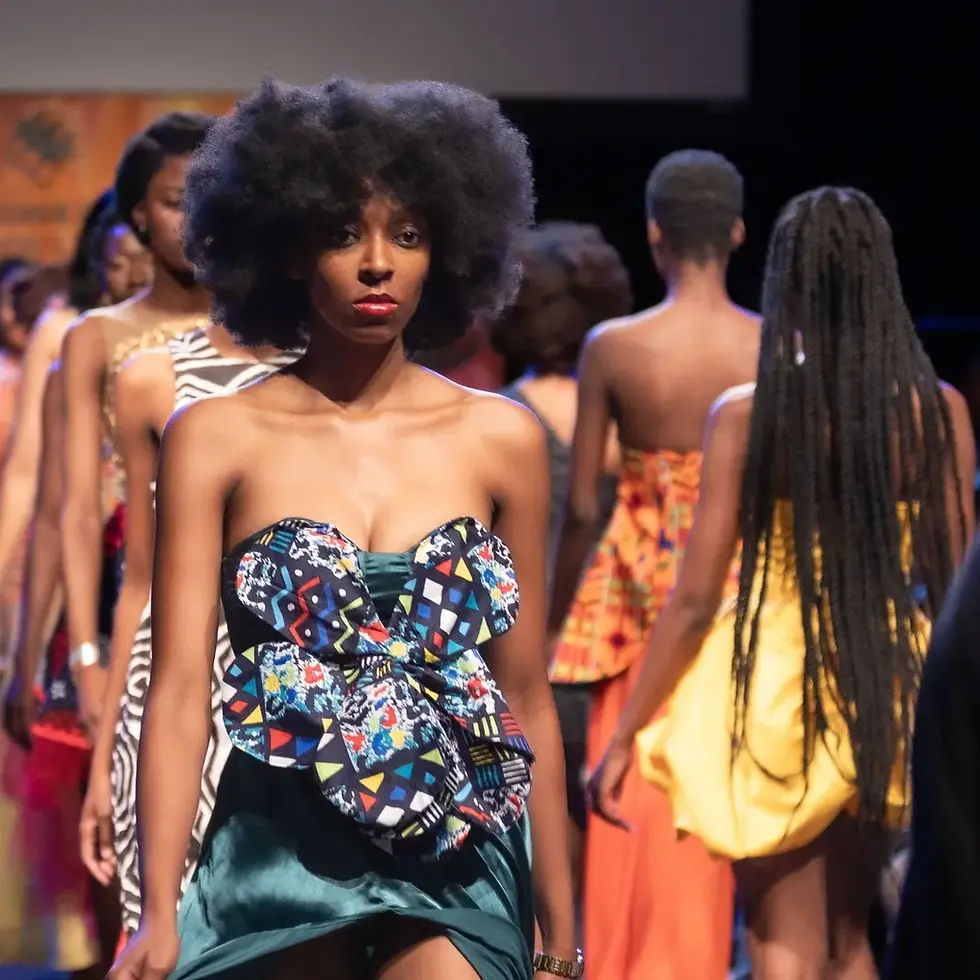
Soweto Fashion Week continues to position itself as a leading South African fashion platform, showcasing designers rooted in heritage, innovation, and textile-led storytelling.
Buzwe Bethu Textiles presented work inspired by Eastern Cape textile traditions, reinforcing the role of African fabrics in contemporary design.
The platform has expanded its institutional partnerships through collaboration with Joburg Tourism Company, positioning Johannesburg as a cultural and creative destination while supporting local economic participation.
Soweto Fashion Week has also entered new international partnerships under the BRICS International Fashion Federation, including planned exchanges with Colombo Fashion Week, Moscow Fashion Week, and São Paulo Fashion Week.
The platform is also introducing AI-supported digital tools to enhance designer visibility and extend its digital infrastructure.
Collaboration
LOVE Teases ‘The Devil Wears Gele’ Nollywood Reimagining

LOVE has released a teaser for The Devil Wears Gele, a Lagos-set reinterpretation of The Devil Wears Prada, commissioned for Issue 26.
Directed by Nolly Babes, the project draws from Nollywood archive aesthetics to reframe the original narrative through a Lagos fashion lens.
Filmed across Lagos, the production blends satire, fashion, and cultural reference, with storytelling anchored in the city’s creative and social environment. The narrative introduces a fictional editor known as “Oga,” positioned as a central authority figure within the story.
The project includes references to industry touchpoints such as a Lisa Folawiyo shoot and Sleek’s Matcha, grounding the film in contemporary Lagos fashion culture.
Brand
Pith Africa Expands Beyond Lagos with Nairobi Pop-Up

Pith Africa will host its first-ever pop-up outside Lagos in Nairobi, Kenya, in collaboration with Studio 18.
The activation marks the brand’s debut in East Africa, offering a physical retail experience designed to showcase key pieces and introduce the Pith Africa universe to a new audience.
The pop-up will take place at Nairobi Street Kitchen in Westlands, bringing together community engagement and product presentation in a single-format retail experience.
Fashion Week
ASFW Nairobi 2026 Advances Regional Industry Dialogue and Partnerships as Event Enters Final Phase

ASFW Nairobi 2026 is currently in its final phase, consolidating its role as a key platform connecting East Africa’s textile, apparel, and leather industries through both commercial and policy-focused engagement.
Day two of the programme was marked by active deal-making, knowledge exchange, and industry networking, with participants spanning manufacturing, investment, and design sectors.
A central moment of the event was the official signing ceremony between Skander Negasi and Detlef Braun of Messe Frankfurt GmbH, signalling a strengthened institutional partnership aimed at advancing Africa’s textile, leather, and apparel value chains.
Conference programming has focused on structural industry themes, including a session on scaling East Africa’s apparel and leather sectors, addressing investment flows, industrial infrastructure, and access to global markets.
Alongside the conference, the event continues to operate as a hybrid platform combining:
A regional expo showcasing textile and leather manufacturing capabilities
A fashion showcase featuring African and international designers
Business-to-business networking facilitating supply chain connections
As the event moves into its final day, organisers position ASFW Nairobi as a convergence point where fashion intersects with manufacturing realities, policy direction, and long-term sector development across East Africa.
Organisation
Messe Frankfurt Expands Into East Africa with Three Trade Fair Licences for ASFW Nairobi

Messe Frankfurt GmbH has announced a major expansion into East Africa, confirming that three of its flagship textile trade fair brands—Texworld, Apparel Sourcing, and Texprocess—will be licensed to Nairobi from 2027 as part of Africa Sourcing and Fashion Week.
The announcement was made during the opening of ASFW Nairobi 2026 by Detlef Braun, signalling a deeper institutional commitment to the region’s textile and apparel sector.
The integration of these established trade fair formats into the ASFW structure is expected to strengthen the platform’s international visibility and reinforce its position as a central hub connecting global demand with African manufacturing and sourcing capabilities.
ASFW Nairobi has already evolved into a key industry meeting point, with the 2026 edition expected to host approximately 150 exhibitors and over 5,000 trade visitors from more than 50 countries. The addition of Texworld, Apparel Sourcing, and Texprocess positions the event as one of the most comprehensive textile industry gatherings in the region, covering the full value chain from raw materials to production technologies.
Messe Frankfurt’s expansion is driven by the growing strategic importance of East Africa’s textile sector, particularly Kenya’s role as an emerging production and sourcing hub. Factors including policy support, renewable energy infrastructure, and proximity to key markets have contributed to the region’s increasing attractiveness for international industry stakeholders.
According to Olaf Schmidt, the move extends the company’s Texpertise Network into one of Africa’s fastest-growing markets, building on over a decade of engagement in Ethiopia and reinforcing global supply chain integration.
Skander Negasi, CEO of Trade and Fairs Group, noted that Kenya’s textile and apparel sector is experiencing sustained growth, with exports reaching approximately $500 million annually, positioning the country as a strategic node within global production networks.
The expansion aligns with Messe Frankfurt’s broader strategy of strengthening international textile ecosystems through long-term partnerships, infrastructure development, and cross-market access.
Fashion Week
South African Fashion Week 2026 Reflects Industry Shift from Cultural Platform to Economic Driver

As South African Fashion Week unfolds in Johannesburg, the event underscores a broader transition within African fashion—where runway presentation increasingly intersects with economic function, cultural authorship, and global positioning.
Long established as a national showcase, South African Fashion Week has evolved into a structured industry platform, bringing together designers, buyers, media, and investors within a consolidated commercial and cultural ecosystem. The runway now operates not only as a site for collection launches but as a medium for narrative construction, where designers articulate identity, heritage, and contemporary African life through material, form, and technique.
The 2026 edition reflects this dual positioning. Designers including Gert-Johan Coetzee, Helen Gibbs (Helon Melon), Naked Ape, Irene Makhuvu Designs, Robyn Agulhas (sinCHUI), Something Good Design, House of Olé, Zamaswazi, Dorcas Mutombu (Emilia D), Anunes, On Duty Jeans, Black Coffee, Craig Jacobs (Fundudzi), and Ephymol presented across the schedule, alongside curated groupings under the J.C. Le Roux Collection. This mix reinforces the platform’s role in bridging experimental, emerging perspectives with established design practices, positioning the runway as both a site of creative exploration and industry continuity.
Beyond aesthetics, the event functions as a commercial access point. Designers gain exposure to retail buyers, manufacturing partners, and international press, supporting the transition from creative practice to scalable business. This reflects a wider continental shift, where fashion weeks are increasingly structured as marketplaces rather than purely cultural showcases.
The adoption of hybrid formats—combining physical runway presentations with digital distribution—has further expanded reach, enabling collections to engage global audiences beyond traditional front-row systems. This development aligns with broader industry trends toward accessibility, visibility, and cross-market integration.
Across the continent, parallel platforms such as Lagos Fashion Week are contributing to a distributed but interconnected fashion ecosystem. Together, these events are repositioning African fashion within global discourse—not as peripheral output, but as a system producing original design language, grounded in local context and scaled through international visibility.
South African Fashion Week 2026 ultimately reflects a convergence point: where cultural expression, industrial development, and economic opportunity align. As global attention continues to shift toward African markets, the focus moves from recognition to influence—specifically, how African designers, platforms, and institutions will shape the next phase of the global fashion system.


Comments