What Happened in African Fashion This Week.

This week’s developments reflect a fashion industry operating with increasing alignment across economic, cultural, and institutional frameworks.
From circularity-focused interventions and infrastructure projects to fellowships and cross-market activations, activity across the sector underscores a growing emphasis on structure, scalability, and long-term sustainability.
At the same time, collections, editorial moments, and retail experiences continue to shape the industry’s visual and cultural narrative.
Together, these developments point to a sector advancing through both creative output and the systems enabling resilience, efficiency, and global relevance.
Clearly Invincible brings you the latest weekly African fashion recap.
Fashion Week
South African Fashion Week SS26 Prepares to Open with Expanded Platform and Integrated Programming

South African Fashion Week Spring/Summer 2026 is set to take place from April 22 to 25 in Johannesburg, marking a return to physical showcases alongside an expanded, multi-format programme.
The upcoming season introduces a combination of runway presentations, immersive experiences, and broadcast integration, reflecting a broader shift toward positioning fashion as both a cultural and economic driver. The programme opens with a presentation by Gert-Johan Coetzee at Cirk, blending couture with performance-led storytelling.
Core runway shows will be hosted at the VRTUOSUS studio in Hyde Park, featuring designers including Jacques van der Watt and Shaldon Kopman, alongside emerging talent participating in the Scouting Menswear Competition.
The platform continues to operate as a business-to-business showcase, supporting designers through market visibility and media reach. This season also introduces expanded media partnerships with Primedia, aimed at amplifying industry narratives to wider audiences.
Organisers position the SS26 edition as part of a broader evolution toward a more integrated fashion ecosystem, combining design presentation with commerce, storytelling, and industry development.
Fashion Week
Africa Sourcing & Fashion Week Nairobi Conference 2026 to Convene Industry Stakeholders in Nairobi

The Africa Sourcing & Fashion Week Nairobi Conference 2026 is set to take place from April 30 to May 2, 2026, positioning itself as a leading platform for dialogue across Africa’s textile and garment sector.
The conference is expected to host around 1,000 participants, bringing together international experts, industry stakeholders, and investors to address key issues shaping the industry.
Sessions will cover a range of topics including sustainability, finance, manufacturing, logistics, empowerment, and investment opportunities, reflecting the sector’s increasing focus on building scalable and globally competitive systems.
Organisers note that the platform aims to strengthen collaboration, knowledge exchange, and market development across Africa’s growing fashion and textile ecosystem.
Event
Lagos Leather Fair 2026 Opens Applications for Signature Piece Challenge

Lagos Leather Fair 2026 (LLF) has announced the launch of the LLF Signature Piece Challenge, a design initiative aimed at emerging creatives working with leather across Nigeria.
Open to designers, artists, and makers aged 18 to 35, the programme invites participants to develop original concepts that showcase craftsmanship, identity, and material innovation. Initial submissions require design sketches or lookbooks, with applications closing on April 18, 2026.
Shortlisted candidates will undergo a structured development process, including a screening phase and a mandatory in-person workshop in Lagos led by industry professionals. The programme will culminate in the selection of six finalists, who will present their work during LLF2026, scheduled for June 26 to 28.
The winner of the challenge will receive a cash prize, alongside industry exposure and mentorship opportunities.
The initiative, founded by Femi Handbags and delivered in partnership with Obsidian Advisory, is positioned to support talent development and strengthen Nigeria’s leather and accessories ecosystem.
Event
Morocco Fashion Style & Tex 2026 Underway in Casablanca

The 11th edition of Morocco Fashion Style & Tex 2026 is currently taking place at the Casablanca International Fairground (OFEC) from April 2 to 5, positioning the city as a key hub for African and Mediterranean textile trade.
The exhibition has brought together over 550 exhibitors and nearly 16,000 visitors, including textile manufacturers, machinery suppliers, and buyers from across Africa and Europe. The event showcases a wide range of products spanning textiles, apparel, and production technologies.
In addition to trade activity, the programme features trend seminars, workshops, and industry sessions focused on sourcing, innovation, and evolving design directions across regional markets.
Organisers highlight the platform’s role in facilitating export opportunities, strengthening supply chain connections, and advancing Morocco’s position as a gateway to the African textile market.
Event
Lagos Fashion Week Featured at ChangeNOW Summit in Paris

Lagos Fashion Week has been selected as one of the featured solutions at ChangeNOW Summit 2026, held in Paris from March 30 to April 1, 2026.
Represented by Omoyemi Akerele, the platform presented its Irapada Project as part of the exhibition programme, positioning African-led circular fashion systems within a global sustainability dialogue.
As part of the summit’s programming, Akerele participated in “Sustainable Fashion Office Hours,” hosted by Rachel Arthur, alongside industry contributors including Bella Webb and Sophia Yang. The session focused on knowledge exchange and practical insights for emerging fashion practitioners.
She also contributed to a panel discussion titled “Worn Out: Fashion’s Waste Problem,” addressing systemic challenges within the global fashion value chain. The session featured keynote speaker Hasna Kourda and panellists including Julia Faure, Simon Peyronnaud and Lewis Akenji.
The participation highlights the growing visibility of African fashion ecosystems within global sustainability and circular economy conversations.
Organisation
Ethical Fashion Initiative Trains Kenyan Artisan Groups in ESG Implementation

The Ethical Fashion Initiative (EFI) has completed a two-phase training programme aimed at strengthening Environmental, Social, and Governance (ESG) practices across artisan and community groups in Kenya.
The initiative brought together 17 representatives from organisations including Virtuous Women Group, Smart Young Mothers, and Chovu Creations. The first phase, held at Don Bosco Boys’ Town Technical Institution in Nairobi, focused on building practical ESG knowledge through hands-on sessions. Participants developed tailored Codes of Conduct and governance frameworks aligned with their operational realities.
The second phase shifted to a decentralised model, with participants returning to communities in Kajiado and Gilgil to deliver peer-led training. This approach aimed to localise ESG adoption and encourage wider community ownership.
According to programme facilitators, the training translated ESG from an abstract concept into actionable systems, including payment tracking, record keeping, and workplace standards. Organisers noted that these tools are expected to improve operational transparency, reduce internal conflict, and enhance market readiness.
The sessions also surfaced broader structural challenges affecting artisan productivity, including limited workspace infrastructure and health-related issues such as untreated vision conditions among beadworkers. Participants additionally proposed more inclusive knowledge-sharing formats, including audio-based materials, and highlighted the importance of engaging younger members to support continuity and digital integration.
EFI stated that the programme establishes a network of trained community facilitators, positioning artisan groups to strengthen governance practices while improving access to ethical and competitive market opportunities.
Event
Africa Fashion Exhibition Concludes Journey with Final Stop in Paris
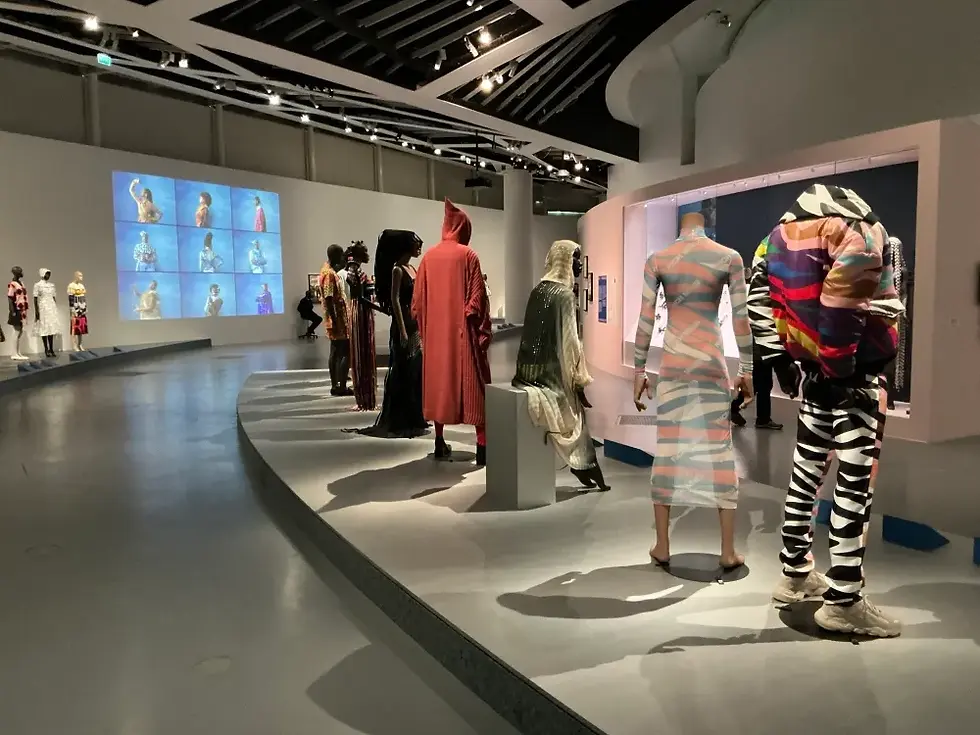
The Africa Fashion Exhibition has arrived in Paris for its final stop, marking the conclusion of a multi-city journey exploring African fashion through craft, culture, and contemporary design.
Bringing together designers, artisans, and creatives, the exhibition presents a cross-section of work that reflects the evolving language of African fashion and its growing global relevance.
Positioned as both a showcase and a point of exchange, the Paris edition offers audiences insight into the processes, materials, and narratives behind each piece, reinforcing the role of craftsmanship and cultural dialogue within the industry.
Organisers describe the final stop as a culmination of the exhibition’s broader objective—to connect African creative expression with international audiences while highlighting the depth and diversity of the continent’s fashion ecosystem.
Organisation
Industrie Africa to Pivot to Advisory Model

Industrie Africa, a leading multi-brand e-commerce platform for African fashion, is set to shut down its retail operations on April 30, marking a significant shift in the continent’s digital fashion landscape.
Founded by Nisha Kanabar, the platform will transition into Industrie Africa Plus (IA+), an advisory business focused on connecting African designers with physical retail opportunities through concept stores, pop-ups, and partnerships with luxury hotels and cultural institutions. Its first activation has already launched as a concept boutique on Bawe Island in Zanzibar.
The closure follows a series of operational challenges, including cross-border logistics constraints, inconsistent tariff regimes, and heavy reliance on the United States market, which accounted for the majority of sales. Recent tariff changes and the removal of duty-free thresholds significantly impacted consumer purchasing behaviour and overall business viability.
Since its launch, Industrie Africa played a key role in scaling global access to African designers, stocking brands such as Lisa Folawiyo, Christie Brown, and Tongoro, while shipping to nearly 60 countries.
The move reflects broader shifts within global luxury e-commerce, where multi-brand retail models are facing increasing pressure. For African designers, the development signals a growing need to reassess distribution strategies, with many turning toward direct-to-consumer models and alternative retail formats better aligned with small-batch, craft-led production.
Economic
Uganda Proposes 30% Levy on Second-Hand Clothing in New Trade Bill

The government of Uganda has introduced the External Trade (Amendment) Bill, 2026, proposing a 30% environmental levy on imported second-hand clothing, while removing key import charges on essential medicines and agricultural inputs.
Tabled by Finance Minister Matia Kasaija, the bill seeks to amend existing trade laws by exempting vaccines, medical supplies, and agrochemicals from infrastructure levies and import declaration fees. The move is aimed at reducing costs in critical sectors such as healthcare and agriculture.
At the same time, the proposed 30% levy on used clothing—calculated based on Cost, Insurance, and Freight (CIF) value—signals a renewed effort to protect domestic textile and garment industries while addressing environmental concerns linked to textile waste.
Second-hand clothing imports, widely known as mivumba, play a significant role in Uganda’s informal economy. However, policymakers argue that these imports undermine local manufacturing and contribute to waste management challenges.
If passed, the legislation will take effect on July 1, 2026. It is expected to prompt debate as authorities balance industrial policy objectives with the economic realities of a sector that supports thousands of livelihoods.
Event
ÀTÚNDA Slow Fashion Pop-Up Opens in London with Multi-Brand Showcase

ÀTÚNDA has launched a six-day slow fashion pop-up in London, running from April 2 to 6 at 19 D’Arblay Street, bringing together a rotating lineup of emerging and established designers.
The programme features daily brand activations, with early showcases from labels including Fruché, Nitèmi, This Is Us, Ywande, Margaux Wong, and Pichulik. Subsequent days highlight designers such as Rírán, Nyosi, Kílókó Sí, Henri Uduku, Patendoyart, Garbe, and Ivory Afrikaan, alongside Ajaneé, By Falase, Wandé Esan, Marachamp, Maliko, Sekï, and Unrefyned.
Positioned as a curated retail and cultural experience, the pop-up emphasises slow fashion practices, offering audiences the opportunity to engage directly with designers and explore collections centred on craftsmanship, sustainability, and independent production
Brand
KAI Returns to ALÁRA Lagos with Expanded Pop-Up Experience

KAI returns to ALÁRA Lagos with a renewed pop-up experience, marking a continued collaboration between the brand and one of Lagos’ leading concept retail spaces.
The activation brings together curated fashion selections and in-person retail engagement, reinforcing KAI’s focus on physical interaction and community-driven experiences. Positioned within ALÁRA’s design-led environment, the pop-up extends beyond conventional shopping, offering a setting where fashion, culture, and social exchange intersect.
Organisers frame the return as a stronger, more expansive iteration, building on previous editions while deepening the connection between the brand and its Lagos audience.
Event
Homecoming Explores the Next Phase of African Streetwear with Panel and Concept Store Activation

Homecoming convenes a cross-section of industry voices to examine the evolution of African streetwear, bringing together panelists Ireti Zaccheus, Olaniyan Adebola, and Free The Youth, with the session hosted by Grace Ladoja MBE.
Delivered in partnership with the Virgil Abloh Foundation, the programme positions dialogue at the centre of its platform, focusing on creative direction, cultural identity, and the future trajectory of streetwear from the continent.
Alongside the panel, an immersive concept store activation features a curated mix of brands including Obida, Pith, Motherlan, Sharkkini, Billionaire Boys Club, Mowalola, Stüssy, Mejimeji, and Ambush, among others.
The retail experience also introduces the official Nike Air Max Plus collaboration with Homecoming, launched exclusively within the space. Designed as an intimate and highly curated environment, the concept store blends commerce with culture, reinforcing Homecoming’s role as a platform connecting African streetwear to global conversations.t.


Comments